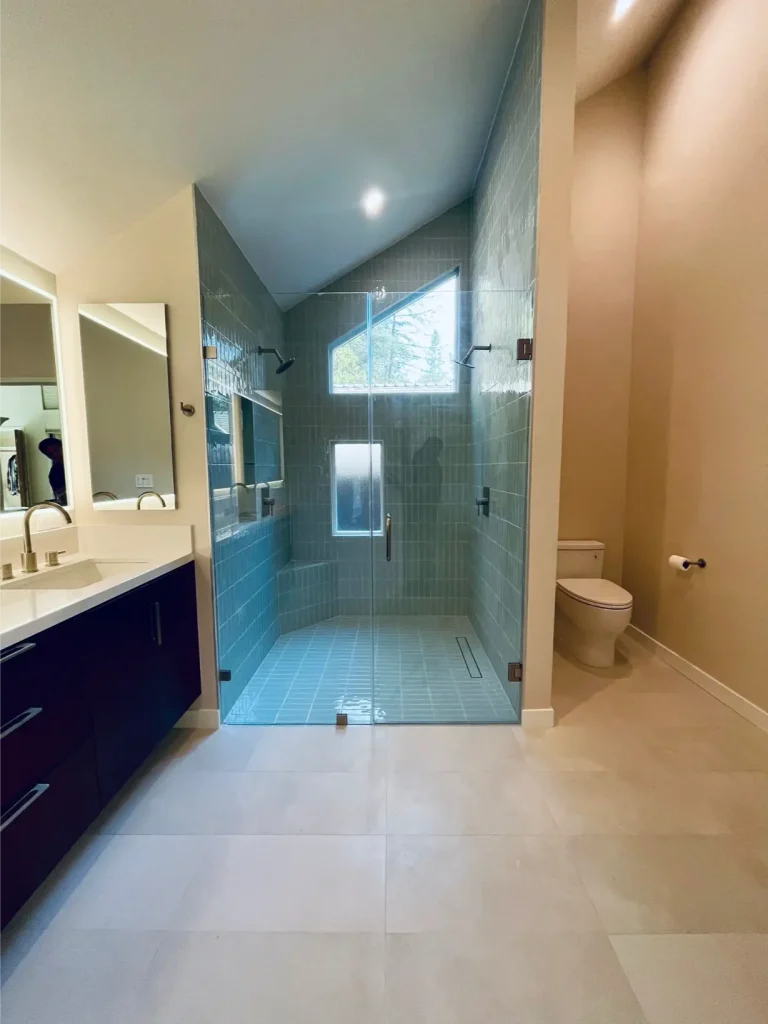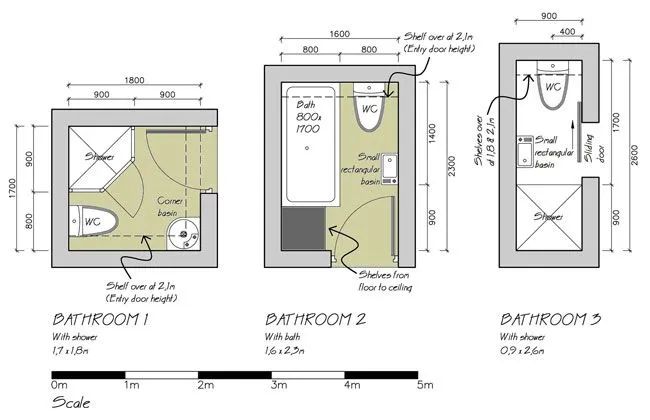
We’ve helped countless homeowners create stunning spaces that blend classic charm with contemporary comfort. A transitional bathroom offers the perfect middle ground between traditional elegance and modern simplicity. This design approach lets you enjoy timeless beauty without sacrificing current functionality. Over the years, we’ve seen this style gain massive popularity because it works with almost any home. Whether you’re planning a complete remodel or want to refresh your space, understanding this balanced approach makes all the difference. Let’s explore what makes these spaces so appealing and how you can create one yourself.
What Makes a Transitional Bathroom Special
Here’s what we love about this design approach. It combines the best parts of two different worlds. You get the warmth and detail of traditional spaces mixed with the clean lines of contemporary rooms. We’ve installed countless transitional-style bathroom projects where homeowners wanted something that felt both familiar and fresh.
The beauty lies in the balance. You won’t find heavy ornate details that feel stuffy. You also won’t see ultra-minimalist spaces that feel cold. Instead, a transitional design element uses neutral colors, simple lines, and quality materials. The result feels both comfortable and sophisticated.
Key Elements of Transitional Design
When we walk into these spaces, certain features stand out immediately. The color palette stays neutral with whites, grays, and soft earth tones. We typically use shaker-style cabinets because they’re simple but elegant. The hardware bridges both styles with brushed nickel or matte black finishes.
Lighting plays a massive role in any transitional design style, making it the focal point of your project. We mix classic sconces with modern fixtures to create visual interest. The tile choices lean toward subway patterns or simple geometric shapes. Everything works together without competing for attention.
The Benefits and Drawbacks of Transitional Bathroom Design
Let’s talk about why this style works so well for most homes. First, it never goes out of fashion. We’ve seen trends come and go, but this balanced approach stays relevant. Your transitional bathroom won’t look dated in five years, unlike some bold design choices.
The versatility makes our job easier, too. This style fits with almost any home architecture. Whether you have a Victorian house or a modern build, the approach adapts beautifully. Plus, it appeals to a wide range of tastes, which helps with resale value.
However, there are some challenges to consider. The neutral palette can feel boring if you don’t add enough texture. We always recommend layering different materials to keep things interesting. Another drawback is the cost. Quality fixtures and materials that bridge both styles often come with higher price tags.
Why Homeowners Choose This Style
Most clients come to us wanting a space that won’t quickly feel outdated. They’re tired of chasing trends that disappear fast. A well-designed transitional bathroom gives them confidence that their investment will last. We’ve had clients tell us years later how much they still love their space.
Families appreciate the timeless quality, too. Kids grow up, tastes change, but the space still works. The clean lines make maintenance easier, while the classic touches add warmth. It’s both practical and beautiful, exactly what busy homeowners need.
Design Idea #1: Classic Vanity with Modern Fixtures
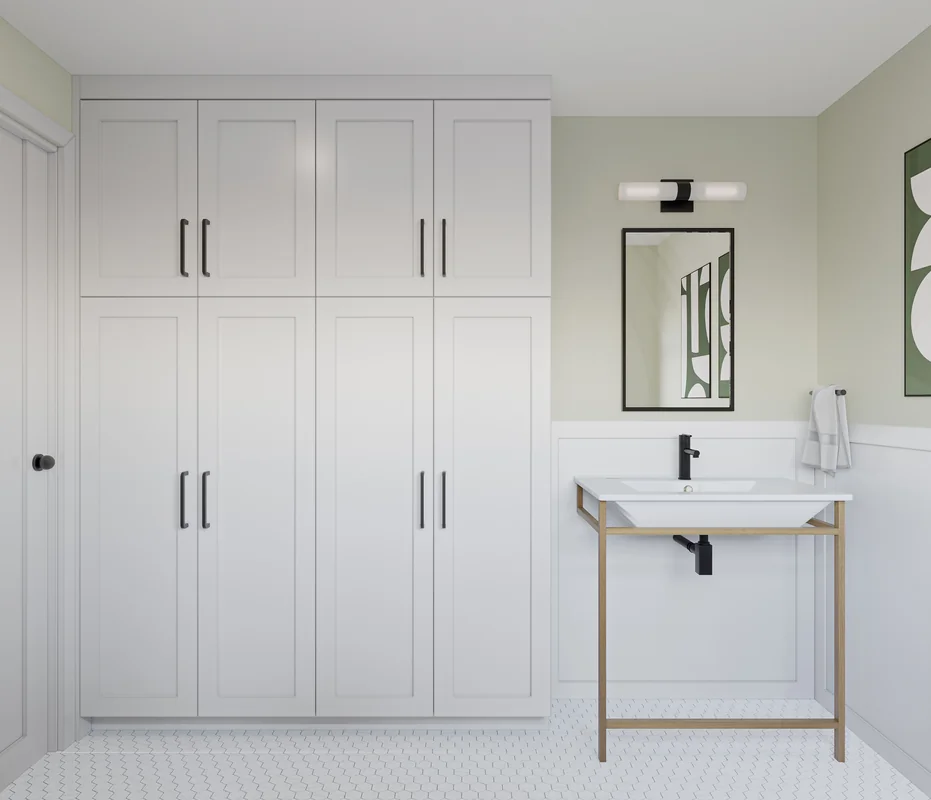
One of our favorite combinations pairs traditional bathroom vanities with contemporary faucets. We recently completed a transitional bathroom project, installing a shaker-style vanity in soft gray. The simple cabinet doors had classic proportions but clean lines. Then we added a wall-mounted faucet in matte black.
The contrast looked amazing. The vanity provided traditional warmth and storage. The modern fixture added a sleek, updated feel. We topped it with a marble countertop that bridges both styles perfectly. The marble has classic appeal, but we cut it with a modern edge profile.
For hardware, we chose simple bar pulls in brushed gold. This small detail tied everything together. The mirror frame stayed minimal to let the vanity shine. Our client loves how their transitional bathroom feels, both elegant and current at the same time.
Design Idea #2: Tile Patterns That Balance Old and New
Tile selection can make or break your design vision. We’ve learned this through years of installations. The correct pattern creates visual interest without overwhelming the space. For a recent bathroom remodel, we used classic subway tile but installed it in a herringbone pattern.
This approach gave us the best of both worlds. Subway tile feels traditional and timeless. The herringbone layout added modern sophistication. We kept the grout lines thin and used a soft gray color. This kept everything looking clean and contemporary.
Choosing the Right Bathroom Tiles
Floor tile deserves careful consideration, too. We often recommend these options for the perfect balance:
- Large-format porcelain in soft gray or beige
- Hexagon patterns in neutral colors
- Wood-look tile for warmth without maintenance
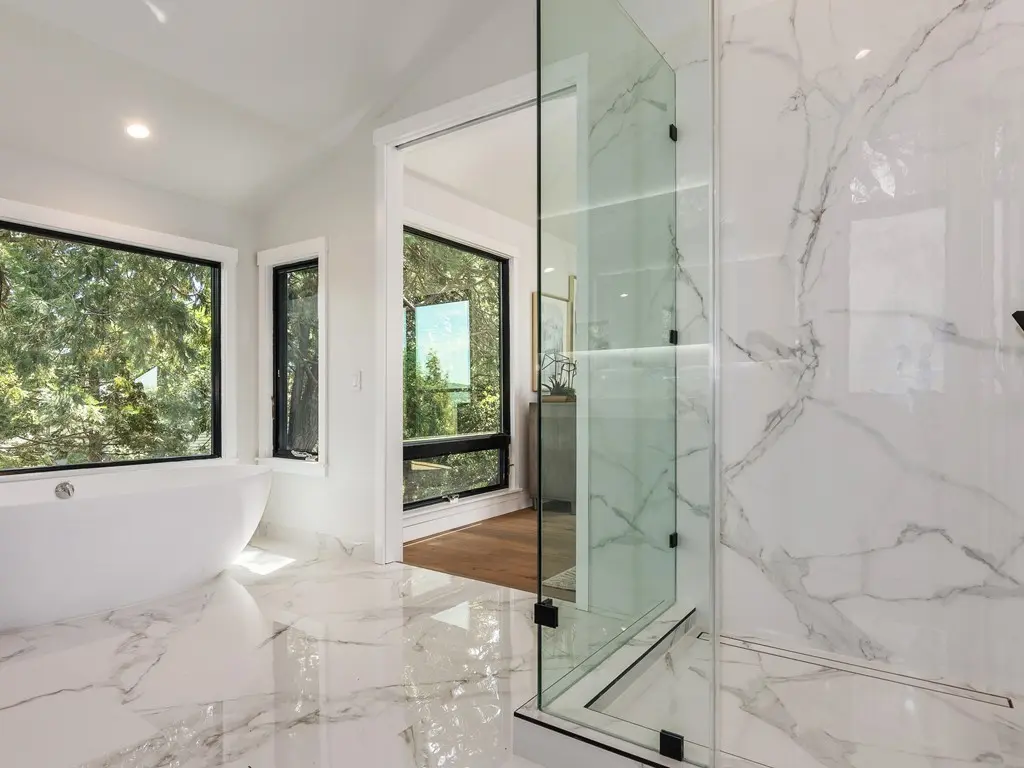
- Simple marble or marble-look options
- Geometric shapes with subtle patterns
The key is avoiding anything too ornate or too stark. We stick with neutral colors and simple patterns. This keeps your investment looking fresh for decades. Plus, these choices work well in both small bathroom spaces and larger master suites.

Design Idea #3: Mixing Traditional Bathtub with Modern Design
Nothing says luxury like a freestanding bathtub. We recently installed a classic clawfoot tub in a transitional bathroom, but updated it with a modern twist. Instead of traditional brass feet, we chose a matte black finish. The tub itself had clean lines rather than ornate curves.
We paired this with a contemporary floor-mounted tub filler. The contrast looked stunning against white subway tile walls. The space felt spa-like and sophisticated. Our clients wanted a soaking tub that made a statement, and this delivered perfectly.
The surrounding elements stayed minimal. We added simple floating shelves in natural wood. A modern pendant light hung nearby for task lighting. The floor used large-format gray tile. Everything complemented the tub without competing with it.
The Future of Transitional Bathroom Style
Looking ahead, we see this approach evolving in exciting ways. Homeowners want more sustainable materials that still look beautiful. We’re sourcing eco-friendly options that maintain the balanced aesthetic for every transitional bathroom we design. Recycled glass countertops and low-VOC paints are becoming standard requests.
Technology integration is another growing trend. Smart mirrors, digital shower controls, and heated floors blend seamlessly into these spaces. The key is keeping the tech subtle. We hide controls and wiring to maintain the clean aesthetic.
Color is making a comeback, too. While neutrals remain popular, we’re adding more personality through accessories. Clients want spaces that reflect their style while staying versatile. We’re incorporating more texture through natural materials like stone, wood, and metal. The future looks bright for this adaptable design approach that continues to evolve with homeowner needs.
Frequently Asked Questions
How much does a transitional bathroom remodel typically cost?
Costs vary widely based on your space size and material choices. We’ve completed transitional bathroom projects ranging from $8,000 for basic updates to $30,000+ for complete renovations. The average falls between $15,000 and $20,000. This includes new vanities, tile work, fixtures, and lighting. High-end materials and custom work increase the budget. We always recommend getting multiple quotes and planning for a 10-15% contingency fund to cover unexpected issues that may arise during construction.
Can I create this style in a small bathroom?
Absolutely! Small spaces actually benefit from this balanced approach. The clean lines and neutral colors make rooms feel larger. We focus on a single statement piece, like a beautiful vanity. Then we keep everything else simple and functional. Wall-mounted fixtures save floor space. Light colors and good lighting open up the room. We’ve successfully transformed many tiny spaces into stylish transitional bathroom retreats using these principles.
What's the difference between transitional and contemporary design?
Contemporary spaces lean heavily toward minimalism with stark lines and bold contrasts. A transitional bathroom softens those hard edges with traditional warmth. You’ll see more texture, layered materials, and subtle details. Contemporary might use all white with one black accent wall. This style uses varied neutrals with mixed metal finishes. Both are beautiful, but a transitional bathroom feels warmer and more approachable for everyday living.
How do I choose between traditional and modern elements?
Start by identifying what you love from each style. Maybe you want a classic vanity but modern lighting. We recommend picking one dominant element (usually the vanity or tile) in your preferred style. Then balance it with opposite-style accents. Keep your ratio roughly 60/40. This creates harmony without confusion in your transitional bathroom. Trust your instincts – if something feels off, it probably needs adjustment.
What colors work best for this style?
Stick with neutral bases like white, gray, beige, and taupe. These create the perfect canvas for mixing styles in any transitional bathroom. We add depth through different shades of the same color family. Warm grays pair beautifully with soft whites. Greige (gray-beige) works with almost everything. You can introduce subtle color through towels, artwork, or a single accent wall. Just keep it soft and sophisticated rather than bold and bright.
Will this style work with my existing home's architecture?
Yes! That’s the beauty of this adaptable approach. We’ve successfully installed transitional bathroom designs in Victorian homes, modern builds, ranch houses, and everything in between. The balanced nature means it complements rather than clashes. For older homes, we emphasize slightly more traditional elements. For newer construction, we lean a bit more toward contemporary design. The flexibility makes a transitional bathroom work with any architectural style.